




What Does Virginia's 2027 Ban on Unserialized Frames and Receivers Mean for Online Gun Stores?
Starting Jan. 1, 2027, Virginia bans selling or offering unserialized and unfinished frames and receivers. What the law says, who is exempt, and what online sellers should review before then.
Giancarlo Byrne
11/24/2026
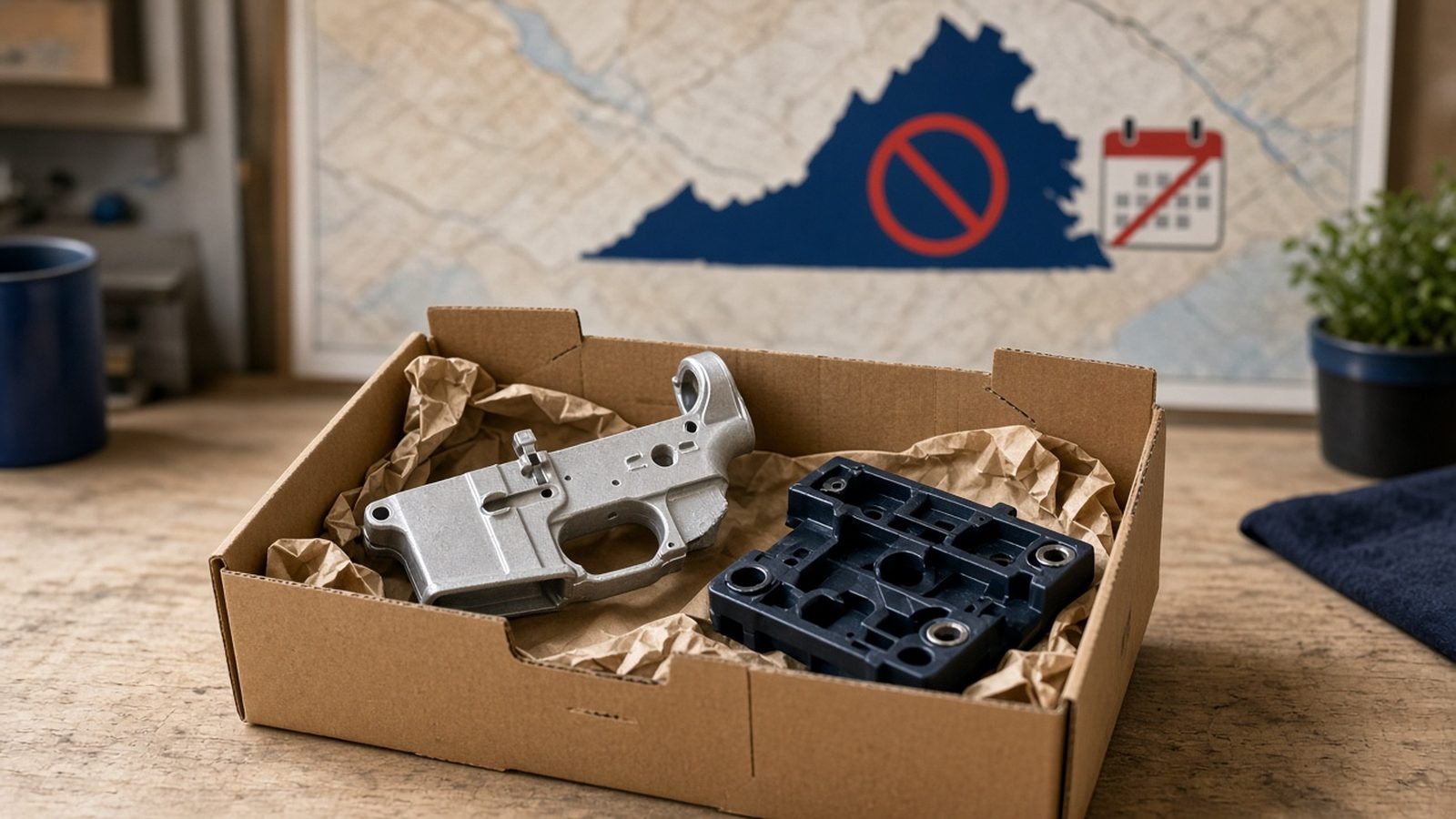
What does Virginia’s new ban on unserialized frames and receivers mean for online gun stores? Starting January 1, 2027, Virginia Code § 18.2-308.5:2 makes it unlawful to sell, offer for sale, or transfer an unfinished frame or receiver unless it is both a firearm under federal law and carries a valid serial number. If you sell 80% lowers, unfinished pistol frames, or build kits that include one, Virginia orders need a plan before the new year.
This post walks through what the statute says, who it exempts, what it leaves unclear, and what online sellers may want to review now. It’s general information, not legal advice. If Virginia is a meaningful market for you, talk to a firearms attorney before January.
Where the law came from
The section was enacted in 2026 as Senate Bill 323, 2026 Acts of Assembly Chapter 532, with an identical House bill, HB 40. Governor Spanberger approved both on April 10, 2026, and her signing release describes them as banning “the manufacture, sale, and possession of untraceable firearms without serial numbers.” Bill history is on the Virginia LIS page for SB 323.
Most of the section takes effect January 1, 2027. The possession ban in subsection C starts later, on July 1, 2027. We didn’t find a lawsuit or injunction against this law as of November 24, 2026. Virginia’s separate 2026 litigation over other gun laws involves a different statute.
What the law prohibits
Three parts of the text matter most for sellers.
Frames and receivers (subsection B). It becomes unlawful to “knowingly import, purchase, sell, offer for sale, or transfer ownership of any completed or unfinished frame or receiver” unless it (i) is deemed a firearm under 18 U.S.C. § 921 et seq. and its regulations and (ii) is imprinted with a valid serial number. Both conditions have to be true.
Unserialized firearms (subsection D). Making, assembling, importing, buying, selling, offering for sale, or transferring any firearm without a valid serial number is also unlawful.
Possession (subsection C). From July 1, 2027, knowingly possessing an unserialized firearm or completed or unfinished frame or receiver is unlawful.
A first violation is a Class 1 misdemeanor. A second or later violation is a Class 4 felony.
How broad “unfinished frame or receiver” is
The definition covers “a forging, casting, printing, extrusion, machined body, or similar item” that either:
- is designed to or may readily be completed, assembled, or converted to function as a frame or receiver, or
- “is marketed or sold to the public to become or be used as the frame or receiver of a functional firearm once completed, assembled, or otherwise converted.”
That second prong is the one to read twice. How a product is described can bring it inside the definition, so listing copy is part of the analysis, not only the part itself.
Why serializing it isn’t enough
Because subsection B requires both conditions, a serial number alone doesn’t make an item sellable in Virginia. If an unfinished frame isn’t treated as a firearm under federal law, it fails condition (i) even with a number on it. In practice, the products this law targets are the ones that have shipped straight to the buyer’s door because they weren’t treated as firearms.
Serialized frames, receivers, and complete guns that are already sold as firearms and routed to an FFL aren’t the target here. Federal transfer rules for those items are unchanged.
Who is exempt
Subsection I lists the exemptions. The ones most relevant to sellers:
- Licensed gunsmiths, manufacturers, and importers. Sales or transfers to “a federally licensed gunsmith, manufacturer, or importer or to any other federal licensee authorized to serialize firearms” are exempt.
- Carriers. Common, motor, and air carriers are exempt while receiving, transporting, or delivering property. That covers the carrier, not the seller who shipped the order.
- Old and inoperable items. Antique firearms, items rendered permanently inoperable, and items made before October 22, 1968.
- Law enforcement and the military, buyback programs, and some nonresidents traveling or competing.
- New residents, who get 90 days to serialize, remove, or otherwise comply.
Subsection F says a federal firearms licensee “may serialize” a firearm, frame, or receiver using a set format: the first three and last five digits of the license number, a hyphen, then a unique number. The licensee must keep a record of the transferee’s name, age, residence, the date, and the serial number.
What the law leaves unclear
Some questions don’t have clear answers yet:
- Does a standard dealer count as “authorized to serialize”? The statute defines that phrase as holding a federal license that authorizes imprinting serial numbers under federal law. Whether a Type 01 dealer qualifies under the exemption, or only gunsmiths, manufacturers, and importers, is not settled in anything we’ve reviewed. So shipping an unfinished frame to a Virginia FFL instead of the buyer’s home is not a clear fix.
- Does “offer for sale” reach out-of-state websites? The law has no explicit online or out-of-state clause. Whether a product page visible in Virginia counts as an offer there is unresolved.
- How federal treatment shifts. Condition (i) ties to federal “firearm” status, so any change in how federal rules treat frames and receivers would change which items pass that test.
These are questions for counsel, not for guesswork in a product listing.
What online sellers should review before January 1
- Inventory the affected SKUs. List unfinished lowers, unfinished pistol frames, frame and jig kits, and build kits that include an unserialized frame or receiver.
- Plan Virginia destination handling. For those SKUs, decide with your attorney whether to stop selling to Virginia addresses from January 1, 2027. Remember that routing to a Virginia dealer may not solve it.
- Check your platform’s tools. Your ecommerce platform may have shipping zone, product, or checkout settings that restrict where certain products ship. Test whatever you set up with a Virginia address before the deadline.
- Review product copy. Because marketing language can bring an item inside the definition, have someone read your listings against the statute’s wording.
- Update FAQs and customer service scripts. Tell Virginia buyers plainly what you will and won’t ship, and why.
- Watch for other states. Maryland’s ban on certain convertible pistols also starts January 1, 2027. Our state restrictions hub is a starting point for other state rules.
Where Automatic FFL fits
Automatic FFL handles dealer selection at checkout. When an order needs to go to a licensed dealer, the buyer picks one from a map and list, and the dealer’s license details are added to the order. It doesn’t decide which products are legal in which states, and it doesn’t serialize anything. See how FFL dealer selection works at checkout.
Try it on your store
Look up a transfer dealer for free. Create a free Automatic FFL account to search FFL dealers by license number, name, city, state, or ZIP, open each dealer’s ATF eZ Check record, and see which dealers have certificate data on file. Start with the FFL database. The database is not legal advice and does not replace your own compliance review.
Try Automatic FFL free for 30 days. Add FFL dealer selection to your BigCommerce, WooCommerce, or Adobe Commerce / Magento checkout (Shopify: ammunition only). You’re not charged until the trial ends, and you can cancel before then. Plans start at $99 per site per month after the trial (pricing).
- Start your BigCommerce trial
- Start your WooCommerce trial
- Start your Adobe Commerce / Magento trial
- Start your Shopify ammo trial
Sources: Va. Code § 18.2-308.5:2; Governor of Virginia release, Apr. 10, 2026; SB 323 (2026), Virginia LIS.