




PSA's 17-State SBR Shipping Announcement: What Dealers Should Know
PSA announced shipping complete SBRs to FFLs in 17 states on Oct 23. What that retail policy means for dealers amid ATF NFA guidance and state law.
Giancarlo Byrne
11/06/2026
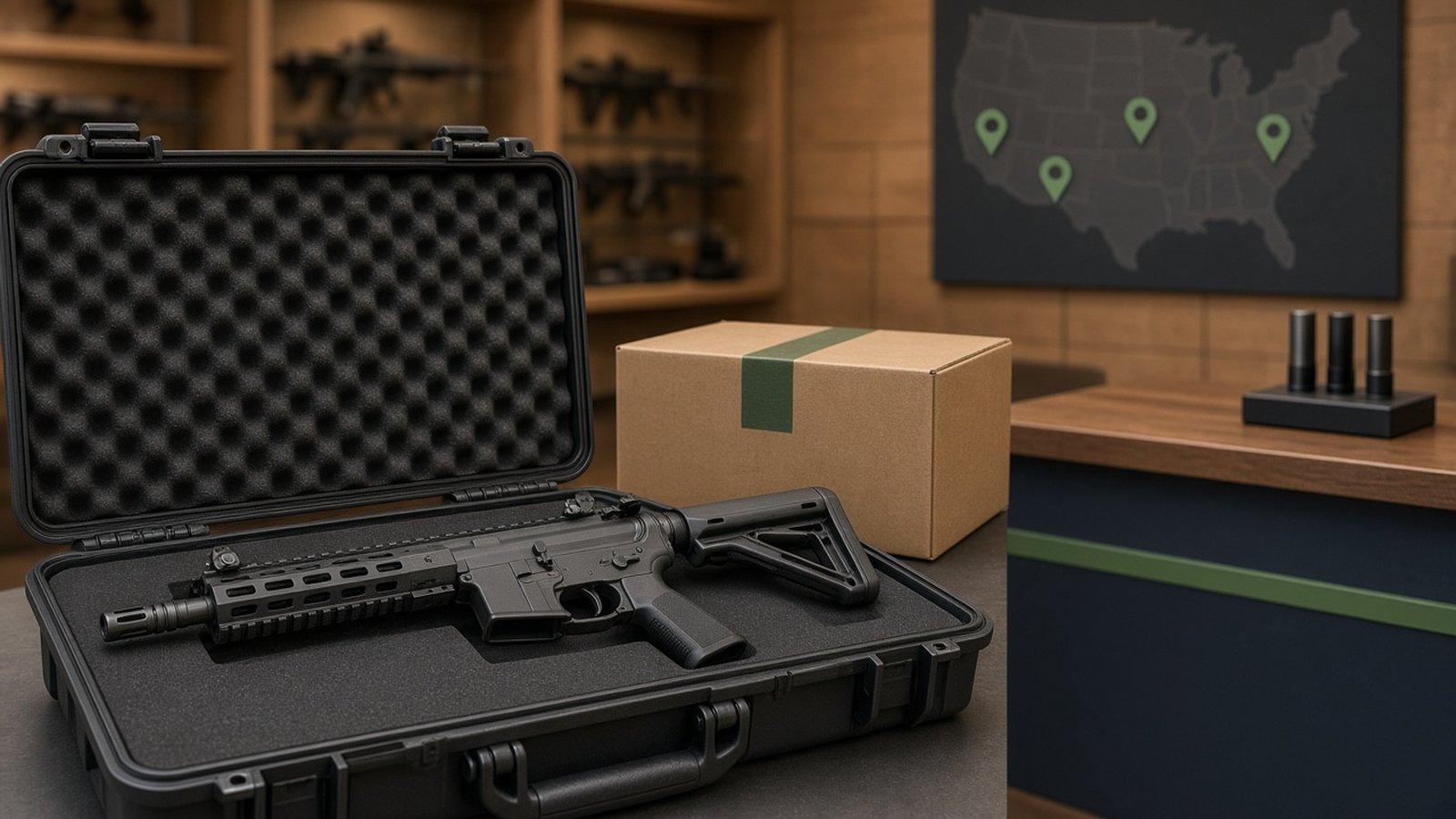
On October 23, 2026, Palmetto State Armory said it was changing how it handles short-barreled rifles after the new NFA guidance. The same day, PSA posted a destination list of 17 states it said it was currently shipping to. That announcement is a retailer shipping policy. It is not a legal map of where SBRs are lawful, and it is not a claim that federal NFA rules have been repealed.
For SOT background, see Do I Need an SOT to Sell Suppressors and SBRs Online?.
What PSA announced on October 23
In an official X post, PSA wrote that it was adjusting the way it handles SBRs following the new NFA guidance. In a same-day reply, PSA listed these destinations:
Idaho, Utah, Wyoming, South Dakota, New Mexico, Minnesota, Kansas, Texas, Arkansas, Mississippi, Tennessee, Kentucky, Indiana, West Virginia, Vermont, New Hampshire, and Maine.
That list is dated October 23, 2026. As of this writing on November 6, 2026, this article does not confirm PSA’s live checkout eligibility, qualifying products, or receiving-dealer conditions. Check PSA’s current terms and receiving-dealer requirements before you treat any destination as active.
AmmoLand’s October 26 report of PSA’s announcement video describes an expansion of eligible complete SBRs through PSA’s ship-to-FFL program without the traditional NFA Form 4 wait, while still using dealer transfer paperwork and a background check. That description is AmmoLand’s account of PSA’s video. Confirm directly with PSA that a particular product qualifies.
Keep four layers separate
1. PSA’s retail shipping policy. The 17-state list is where PSA said it would ship under its own legal and compliance review. It does not bind other sellers, and it does not mean those states allow unregistered SBRs.
2. ATF October 9 enforcement discretion. ATF’s open letter and companion FAQ, reviewed here from SAF-hosted PDF mirrors (FAQ), describe nationwide enforcement discretion around NFA approval and registration for short-barreled rifles, short-barreled shotguns, silencers, and AOWs. Machine guns and destructive devices are unchanged. Special occupational tax and related business obligations remain for those engaged in the NFA business. Those PDFs show the Oct 9 guidance text; they are not proof that live ATF.gov content is unchanged today.
3. Court relief for covered parties. Silencer Shop Foundation v. ATF produced plaintiff-limited injunction relief. PSA presents itself as an original plaintiff. An injunction covering PSA is not something another store can claim by imitation. Nationwide agency discretion and party-limited court relief have different legal bases.
4. State law. Federal nonenforcement does not rewrite state “dangerous ordnance,” registration, or possession rules. A destination on PSA’s shipping list is still a state-law question for the receiving dealer and the end buyer.
§922(b)(4) is not the same as Form 4 or zero tax
Dealers should not collapse three federal ideas into one slogan.
18 U.S.C. 922(b)(4) is a Gun Control Act rule about licensee sale or delivery of certain short-barreled firearms. ATF’s Oct 9 materials treat that provision as not enjoined, while describing interim nonenforcement until new regulations. That is distinct from NFA Form 4 approval and registration practice.
Separately, the zero making and transfer tax context in the letter is about taxing-power holdings for those $0 items. Zero tax is not an NFA repeal and not a deletion of GCA transfer checks.
Under the policy as reported, PSA is not using a routine NFA Form 4 approval wait for eligible complete SBRs shipped to receiving FFLs in the listed states. That is not the same as skipping a background check, a receiving FFL, recordkeeping, or state rules. ATF’s FAQ treats these items as GCA firearms: Form 4473, applicable background-check requirements, recordkeeping, and the ban on transfers to prohibited persons still matter.
What receiving dealers should check
Before you accept a complete-SBR transfer from any retailer under a post-guidance shipping program:
- Confirm the destination is still on the seller’s current ship-to-FFL list, not only on an October 23 screenshot.
- Confirm the SKU is one the seller treats as eligible under its own rules.
- Confirm your state law for possession, registration, and transfer of short-barreled rifles.
- Confirm you will accept the transfer and that your paperwork, 4473, NICS, and recordkeeping process is ready.
- Do not assume another store’s injunction or ATF discretion letter rewrites your state obligations.
Ohio is a useful contrast, not a full state guide. PSA’s October 23 list omitted Ohio. Ohio’s attorney general and R.C. 2923.17 still tie certain dangerous-ordnance exceptions to federal registration concepts. Federal nonenforcement does not automatically clear that kind of state hook.
What Automatic FFL does and does not do here
Automatic FFL helps online stores collect a receiving FFL at checkout for firearms (and ammo where configured) on BigCommerce, WooCommerce, and Magento. Do not treat receiving-FFL selection as confirmation of NFA or SOT status, state-law eligibility, or a particular SBR’s eligibility under PSA’s program. Those questions require separate confirmation from current seller terms, the receiving dealer, and counsel where needed.
For receiving-FFL selection help, see the documentation or contact Automatic FFL (service@automaticffl.com · 469-207-1149). You can also start a 30-day free trial. You are not charged until the trial ends.
This article is general information, not legal advice. Confirm your situation with ATF, your state, and a firearms attorney.