




Connecticut's Convertible Pistol Ban Is on Hold: What FFL Dealers and Online Sellers Should Know
A federal judge paused Connecticut’s felony ban on importing, advertising, and selling new cruciform-trigger pistols. Here is what is on hold and what is still in force.
Giancarlo Byrne
10/19/2026
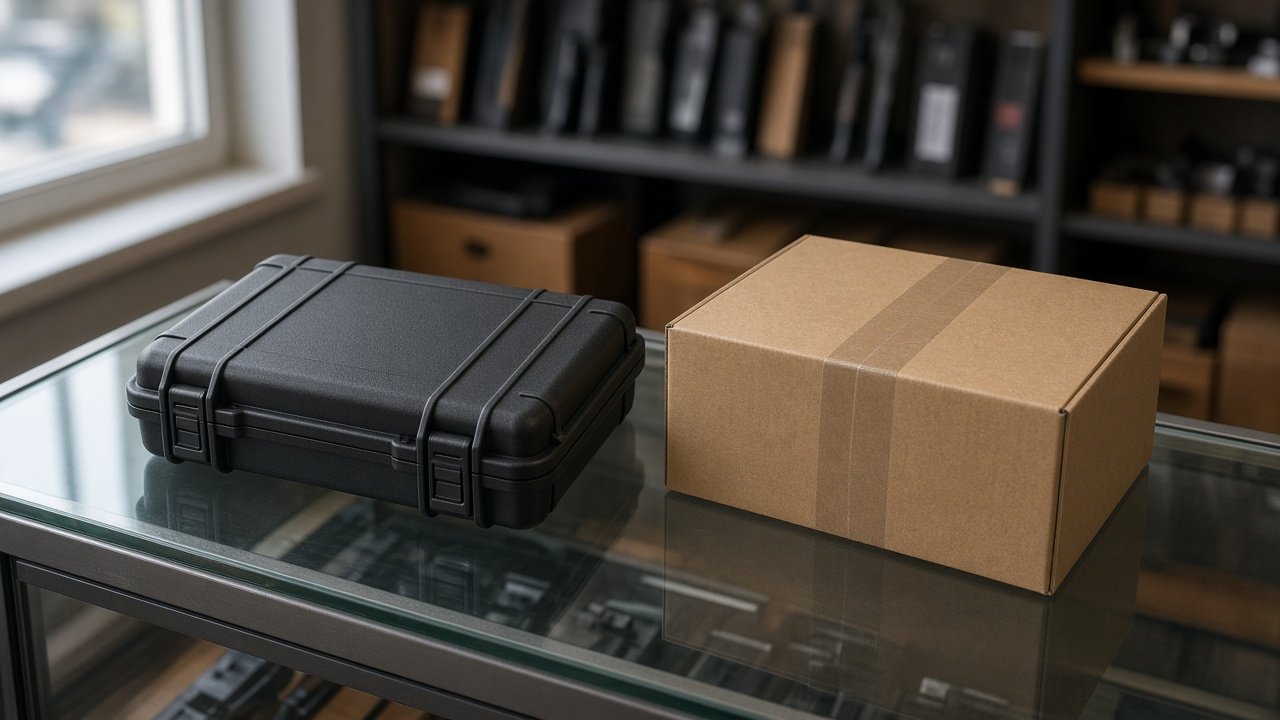
Connecticut passed a law this year that would have made it a felony to import, advertise, or sell new “convertible pistols” in the state starting October 1, 2026. The day before it took effect, a federal judge put that part of the law on hold.
If you are a Connecticut dealer, or you sell handguns online and ship to Connecticut FFLs, the short version is this: one section is paused, the rest of the law is in force, and the pause is preliminary. This article walks through what the court did, what it did not do, and what to watch. It is general information, not legal advice. For decisions about your own inventory, ads, or shipments, talk to a firearms attorney who knows Connecticut law.
What the law says
The law is Public Act 26-41, passed as House Bill 5043 and signed May 26, 2026. It defines a “convertible pistol” as a semiautomatic pistol with a cruciform trigger bar that can be readily converted into a machine gun by attaching a pistol converter. In plain terms, that covers many striker-fired, Glock-pattern designs.
Two exclusions matter for anyone reading a product catalog:
- Hammer-fired semiautomatic pistols are not covered.
- Pistols with a molded tab that shields the cruciform trigger bar from a converter are not covered, unless that tab can be readily removed.
Section 3(a) is the sales section. It makes it a Class D felony to knowingly import into Connecticut, or knowingly advertise, sell, offer, or expose for sale, a convertible pistol manufactured on or after October 1, 2026. Section 3(b) says it does not apply to transfers between two people who are not licensed gun dealers.
The manufacture date matters. In court, the state stressed that the ban reaches only guns made on or after October 1, and the judge called that “true, and not in dispute.” Inventory made before that date was never covered by Section 3(a).
What the court did
Two lawsuits were filed on September 21, 2026: Glock, Inc. v. Griffin, No. 3:26-cv-01525, and National Shooting Sports Foundation v. Griffin, No. 3:26-cv-01528. The NSSF case also included Shadow Systems, a manufacturer, and Blue Trail Range, a Connecticut retailer.
On September 30, Judge Kari A. Dooley of the U.S. District Court for the District of Connecticut granted preliminary injunctions in both cases. In her written opinion, she found the plaintiffs “likely to succeed on the merits of their Second Amendment challenge.”
The separate injunction order bars the defendants from enforcing Section 3(a). That includes all of its parts: importing, advertising, selling, and offering for sale. The defendants are Connecticut’s Chief State’s Attorney, the State’s Attorney for each judicial district, and, in the Glock case, the Commissioner of the Department of Emergency Services and Public Protection.
The order is not limited to the plaintiffs or NSSF members on its face. Because every state prosecutor is named, the practical effect is that the Section 3(a) felony is not being prosecuted while the injunction stands. That is a reading of who is bound, not a statement from the court that the relief is statewide, and it does not address parties who were not named.
The court also did not decide whether certain newer Glock models fall outside the law’s definition. That question is still open.
What is still in force
Only Section 3(a) is on hold. The rest of Public Act 26-41 took effect October 1, 2026. Based on the enacted text, that includes:
- Machine gun definition. A convertible pistol equipped with a pistol converter is a machine gun under Connecticut law.
- Rate-of-fire devices. The state’s rate-of-fire enhancement definition names forced reset triggers, trigger cranks, binary trigger systems, and pistol converters.
- Unfinished frames and lower receivers. The law broadens the definition, requires serial numbers, and routes transfers through pistol transfer procedures.
- Retail permit. Advertising or selling unfinished frames or lowers in Connecticut requires a permit.
If you sell parts and accessories online, those sections matter more right now than the paused handgun ban. Check your catalog for forced reset triggers, binary triggers, and unfinished frames or lowers that can ship to Connecticut addresses.
This is on hold, not over
A preliminary injunction keeps the status quo while the case is decided. It is not a final ruling, and the law has not been struck down or repealed.
As of October 21, 2026, we found no notice of appeal or stay request in court records or news coverage we could search. We were not able to pull the full live docket this week, so we could not confirm what was filed around the October 20 joint scheduling date the court had set. Connecticut’s Attorney General has said the state will keep defending the law. Under the federal appellate rules, a party generally has 30 days from an order like this to appeal, which puts the window around October 30. If an appeal or stay request is filed, the picture could change quickly.
Practical steps for dealers and online sellers
- Separate the sections in your own notes. “The Connecticut law is blocked” is not accurate. “Section 3(a) is preliminarily enjoined” is.
- Keep pre- and post-October 1 inventory easy to tell apart. Manufacture dates are what Section 3(a) turns on. If the injunction is lifted, you will want to know quickly which units it would reach.
- Review Connecticut ads and listings with counsel. The injunction covers advertising, but it is preliminary. Decide with your attorney how to handle Connecticut-facing promotions while the case is pending.
- Talk with your Connecticut receiving dealers. Some may have changed what they will accept after the law passed. One retailer told the court it had already stopped ordering new cruciform-trigger handguns because of the law.
- Set a date to recheck. The appeal window around October 30 is the next point to watch on the docket.
The same lesson from Maryland
Connecticut is not the only state where local rules set the pace this month. After ATF’s October 9 open letter made federal Form 1 and Form 4 filings voluntary for short-barreled rifles (SBRs) and short-barreled shotguns (SBSs), the Maryland State Police issued Advisory LD-FRU-26-001 on October 15.
It says ATF’s letter “does not change Maryland’s requirements.” Under Maryland Public Safety § 5-203, possessing an SBR or SBS is a misdemeanor unless it “has been registered with the federal government in accordance with federal law.” The advisory says the ATF Form 1 or Form 4 “must be submitted to and approved by the ATF before completing the applicable federal Form 4473 and Maryland 77R processes.”
So if your product pages now say “no Form 4, no wait,” Maryland needs an exception. Buyers there should expect the ATF wait, and the receiving dealer cannot complete the Form 4473 and Maryland 77R steps until that approval comes back. The advisory covers SBRs and SBSs only. It does not address suppressors.
Where checkout fits
Automatic FFL lets shoppers choose their receiving FFL dealer at checkout. Whether a given item can go to a given state, and when a dealer can release it, still depends on state law and on the merchant’s and dealer’s own processes. Weeks like this one are a good reminder to keep state-specific notes in your product copy and order confirmations, and to recheck them when a court or agency changes the picture. Setup details are in our documentation.
Sources
- Public Act 26-41 (HB 5043), enacted text
- Preliminary injunction opinion, D. Conn., Sep 30, 2026
- Injunction order, Glock v. Griffin, ECF 32
- Injunction order, NSSF v. Griffin, ECF 45
- CT Public coverage, Oct 2, 2026
- Maryland State Police Advisory LD-FRU-26-001
- Maryland Public Safety § 5-203
This article is general information, not legal advice. Court orders and state guidance can change quickly, so check the current docket and consult a firearms attorney before changing what you sell, advertise, or ship to Connecticut or Maryland.